Peruvian authorities have agreed to a request by China to airlift 20 stranded Chinese Taiwan tourists from Machu Picchu after torrential rains and mudslides closed the historic city over the weekend, embassy sources said Wednesday.
The request came after the Chinese Foreign Ministry received an emergency call from the leader of a Taiwan tourism agency who appealed for help via the Chinese embassy in Lima.
Five people were killed and about 2,000 others were stranded at the World Heritage site in eastern Peru’s Andes mountains after the heaviest rains in 15 years triggered flash flooding and caused numerous mudslides.
Peruvian authorities have promised to send more helicopters to Machu Picchu to help evacuate the tourists after the heavy weather interrupted railway service between the city and Cuzco.
“Five helicopters are on standby to evacuate about 2,000 tourists stranded in Machu Picchu and an aircraft with food and support will arrive in the area shortly,” Tourism Minister Martin Perez said.
The Chinese embassy said the Chinese Taiwan tourists have received drinking water and food from local authorities.
Five days of torrential rains in the Cuzco region have destroyed bridges, 250 houses, and hundreds of hectares of crops. Rail operator Perurail suspended train service Sunday.
Alberto Bisbal, disaster prevention director at Peru’s Civil Defense Institute, said Perurail and the government were working to clear rocks and mud from the tracks and service might be able to resume Wednesday.
Machu Picchu, a pre-Columbian Inca ruin site located 2,430 meters above sea level, is Peru’s top tourist destination. About 1 million people annually visit the site about 1,100 km southeast of Lima.
Toyota announced plans to recall 1.1 million more cars in the US a day after saying it was suspending sales of eight popular US models, bringing the total number of cars recalled in the US to almost eight million. The number of cars in the recall involving gas pedals has grown to at least 5.3 million. According to Toyota, the cars included in the recall were manufactured between March 19, 2009 and January 25, 2010 in Tianjin, China. The vehicles included in the floormat-related recall include:
2005-2010 Toyota Avalon
2007-2010 Camry
2009-2010 Corolla
2008-2010 Highlander
2009-2010 Matrix
2004-2009 Prius
2010 Tacoma
2007-2010 Tundra
2009-2010 Venza
2007-2010 Lexus ES350
2006-2010 IS250
2006-2010 IS350
2009-2010 Pontiac Vibe
Most, but not all, of the vehicles involved in the stuck pedal recall are also involved in the other recall. They are:
2009-2010 Pontiac Vibe
2009-2010 Toyota RAV4, Corolla and Matrix
2005-2010 Avalon
2010 Highlander
2007-2010 Tundra
2008-2010 Sequoia
and some 2007-2010 Camrys.
Read more here and here.
Francis M. Unson
FacebookTwitterWordPress
— @ WiseStamp Signature. Get it now
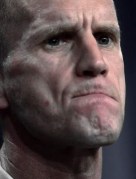
Stanley McChrystal, the senior US general in Afghanistan, has told the Financial Times he believes a negotiated settlement would be the right way to end the Afghan conflict. His comments have fuelled a debate on the merits of talking to the Taliban.
Can negotiations end the war?
The appeal of dialogue to end the Afghan conflict has a whiff of alchemy about it: great in theory but extremely difficult in practice. The biggest problem may be that the Taliban feel they are winning. US troop deaths more than doubled in 2009. Gen McChrystal hopes his surge of 30,000 troops will convince his opponents they are better off negotiating but admits that Taliban attacks are likely to spike. “They have got to create the perception that Afghanistan’s on fire,” he told the Financial Times. With Nato allies already eyeing the exit, the Taliban may believe their long-term goal of regaining power in Kabul is within their grasp.
Who could help facilitate dialogue?
Pakistan played midwife at the birth of the Taliban and, along with Saudi Arabia, was one of only three countries to recognise the movement when it ruled Afghanistan from 1996 to 2001. Reports of efforts by Islamabad and Riyadh to broker talks have surfaced repeatedly. Both are US allies that would use their leverage over any peace process to expand their influence in Washington. Pakistan, in particular, would want to be rewarded with greater backing in its competition with India.
How would talks happen?
Even contacting the Taliban is a complex process involving intermediaries bearing scraps of paper: the leaders shun telephones that could be used to trace their location. Abdul Salam Zaeef, a former Taliban ambassador who lives in Kabul, helps facilitate contacts with the Taliban’s leaders, but organising face-to-face talks would be complex. Saudi Arabia or the United Arab Emirates, which also recognised the Taliban government when it was in power, might be the most plausible venues for initial meetings between low-level representatives.
Although many insurgents loosely pledge allegiance to Mullah Mohammed Omar, the movement’s founder and spiritual head, he was a renowned recluse even before fleeing the 2001 US invasion. Distinguishing key Taliban decision-makers from mid-level commanders who control only small groups of fighters would be tricky.
So what’s the problem?
Too many to list. It is hard to see Mr Omar, who once ruled Afghanistan as emir of an austere theocracy, accepting a role under the current western-style constitution. Although the Taliban has recently stressed it does not pose an international threat, its leaders are conscious of the ire they earned in the west for allowing Osama bin Laden, the head of al-Qaeda, to organise the September 11 2001 attacks from Afghan soil. Mistrust on all sides runs deep.
What about other insurgent leaders?
Gulbuddin Hekmatyar, who leads the insurgency in several eastern provinces, is most likely to cut a deal. A former prime minister, he founded a party called Hezb-e-Islami, a faction of which already shares power in Kabul. A father-and-son team from the Haqqani family who run a fiefdom straddling the Pakistan border are less biddable.
Can Taliban fighters simply be bribed?
Maybe. Western countries gathering in London for a conference on Thursday will pledge funds for a scheme outlined by Hamid Karzai, the president, to try to lure Taliban foot soldiers with job offers. Details remain sketchy. Insurgents may simply accept the incentives then return to the fight. The central problem remains: the Taliban may simply believe it can outlast the west. (Q&A: How do you get the Taliban to negotiate By Matthew Green in Kandahar )
Tuesday, January 26, 2010
by Mike Adams, the Health Ranger
(NaturalNews) It’s the bubble you’ve probably never heard of: The rare earth bubble. And it’s due to pop in 2012, potentially devastating the industries of western nations that depend on these rare elements.
What industries are those? The automobile industry uses tens of thousands of tons of rare earth elements each year, and advanced military technology depends on these elements, too. Lots of “green” technologies depend on them, including wind turbines, low-energy light bulbs and hybrid car batteries. In fact, much of western civilization depends on rare earth elements such as terbium, lanthanum and neodymium.
So what’s the problem with these rare elements? 97 percent of the world\’s supply comes from mines in China, and China is prepared to simply stop exporting these strategic elements to the rest of the world by 2012.
If that happens, the western world will be crippled by the collapse of available rare earth elements. Manufacturing of everything from computers and electronics to farm machinery will grind to a halt. Electronics will disappear from the shelves and prices for manufactured goods that depend on these rare elements will skyrocket. *Click for Full Article*
KABUL—One of the three main leaders of the Afghan insurgency, mercurial warlord Gulbuddin Hekmatyar, has a long history of switching sides, and once fought against his current Taliban allies.
Now, he has held out the possibility of negotiating with Afghan President Hamid Karzai and outlined a roadmap for political reconciliation, opening what could be the most promising avenue for Mr. Karzai’s effort to peacefully resolve the conflict.
It is far from certain that any talks with Mr. Hekmatyar will begin, let alone succeed. But in contrast to Taliban leader Mullah Omar and allied insurgent chief Sirajuddin Haqqani, who refuse any talks with Kabul as long as foreign troops remain in the country, Mr. Hekmatyar took a much more conciliatory line in a recent video.
“We have no agreement with the Taliban—not for fighting the war, and not for the peace,” said Mr. Hekmatyar, who commands the loyalty of thousands of insurgents. “The only thing that unites the Taliban and [us] is the war against the foreigners.”
Unlike in previous videos, where Mr. Hekmatyar used a Kalashnikov rifle as a prop and expressed support for al Qaeda, in the latest tape, recorded in late December and provided to The Wall Street Journal by his aides in Pakistan, he assumed a professorial tone, wearing glasses and a black turban as he spoke in a quiet, soft voice.
Mr. Hekmatyar, who is 59 years old and lived in exile in Iran when the Taliban ruled Afghanistan, built his movement over the last three years into a formidable force. His men dominate the insurgency in several eastern and central Afghan provinces, such as Kunar, Laghman and Kapisa, according to American intelligence estimates.
At the same time, a legal wing of Hizb-e-Islami, an Islamist party that Mr. Hekmatyar founded in the 1970s, participates in the Afghan parliament, with 19 of 246 seats. One of its leaders is minister of the economy in Mr. Karzai’s new cabinet. Though the legal Hizb-e-Islami denies formal links with Mr. Hekmatyar, many of its senior members are believed to maintain communications with the grizzled warlord, and openly support the idea of bringing him into the government.
Mr. Hekmatyar’s “reported willingness to reconcile with the Afghan government” has already become a key factor working against the militancy because it “causes concern that others may follow,” the U.S.-led international forces’ intelligence chief, Maj. Gen. Michael Flynn, noted in a recent presentation. In addition to subtracting fighters from the battlefield, such a reconciliation would boost the legitimacy of the Kabul government.
Currently, fighters of the three main groups—Mullah Omar’s Taliban in the south, where the bulk of combat takes place, the Haqqani network in the southeast, and Mr. Hekmatyar’s men in its strongholds—cooperate with each other, at least on the tactical level, American intelligence officials say.
But, while Mr. Haqqani made a formal oath of allegiance to Mullah Omar, recognizing him as his overall leader, Mr. Hekmatyar repeatedly refused to make such a pledge. In the tape, he said he spent “a couple of months” with Mullah Omar and al Qaeda leaders Osama bin Laden and Ayman al Zawahri in 2002, but insisted that he “had no direct or indirect contact with them since then.”
He also said that the main reason he’s fighting American forces is because the U.S. allied itself with his bitter Afghan enemies after the Taliban’s downfall in 2001.
“It’s just a convenience for Hekmatyar to be with the Taliban,” says Marc Sageman, a terrorism expert who, as a Central Intelligence Agency officer in Pakistan, worked with Afghan insurgent leaders in the late 1980s. “Hekmatyar’s main goal is Hekmatyar. He’ll do anything that will help him out—it all depends on the deal he’s going to get.”
In the tape, Mr. Hekmatyar outlined his political program, calling for elections under a neutral caretaker government once U.S.-led forces withdraw, predicting that Hezb-i-Islami will win 70% of the votes, and saying that he would accept an impartial international peacekeeping force. While the Taliban brand Mr. Karzai a traitor, Mr. Hekmatyar promised to support the Afghan president should he stop being subservient to his American backers.
“Negotiations with the Afghan government will not be fruitful unless the foreigners give the Afghan government the authority to start negotiations independently—but unfortunately it has not been given this authority yet,” Mr. Hekmatyar said in the tape.
Similar overtures by Mr. Hekmatyar in recent months failed to produce any breakthrough. And, while some Afghan and American officials have already explored indirect contacts with Mr. Hekmatyar, the U.S. government so far refuses to make a meaningful distinction between him and the two other man insurgent chiefs.
“Each one has a different origin and orientation,” says Richard Holbrooke, the U.S. special representative for Afghanistan and Pakistan. “But all work together and are linked to al Qaeda.”
A Pashtun former engineering student from the northern Kunduz province, Mr. Hekmatyar started out in politics as a pro-Soviet Communist. He embraced pan-Islamist ideology in the 1970s, and famously refused to meet President Ronald Reagan even as the U.S. was pumping millions of dollars into his guerrilla movement through the Pakistani intelligence in the 1980s.
After the pro-Soviet regime collapsed in 1992, Mr. Hekmatyar reduced large parts of Kabul to rubble as he fought rival mujahedeen commanders for control of the capital, and briefly served as the nation’s prime minister. Once Pakistan switched its support to the nascent Taliban movement in the mid-1990s, Mr. Hekmatyar was chased out by the Taliban, and had to seek refuge in Iran.
After the U.S. overthrew the Taliban in 2001, it excluded the warlord—who was seen as a spent force—from the new Kabul government. In the following months, as an embittered Mr. Hekmatyar started voicing support for the Taliban and al Qaeda, he was expelled by Iran, and was nearly killed by a U.S. airstrike. In 2003, Mr. Hekmatyar was designated a terrorist by the U.S. and put on the United Nations blacklist alongside Mullah Omar and Mr. bin Laden.
These days, some American officials say, Mr. Hekmatyar has managed to rebuild his fortunes in part because of help from elements of the powerful Pakistani spy agency, the Inter-Services Intelligence Directorate. Mr. Hekmatyar’s movement uses the area around the Pakistani city of Peshawar, with its teeming Afghan refugee camps, as its logistics hub. His daughter and son-in-law reside in the Pakistani capital, Islamabad. Pakistan denies it is giving any aid to the Taliban or its insurgent allies.
“Hekmatyar could be turned if the ISI wanted him to be turned,” says Bruce Riedel, a Brooking Institution scholar and former senior CIA officer who oversaw President Barack Obama’s Afghanistan and Pakistan policy review last year. “He is too closely tied to them to operate for us without their okay.” ASIA NEWS JANUARY 21, 2010 Afghan Insurgent Outlines Peace Plan. By YAROSLAV TROFIMOV
Write to Yaroslav Trofimov at yaroslav.trofimov@wsj.com
So I was having breakfast when I was emailed these amazing pictures, which I thought I’d share. They are from North-East China, at a place called Harbin. It is absolutely breathtaking stuff. Taken in September, 2008, at the Harbin Ice and Snow Sculpture Festival by… well one of dad’s friend’s I suppose.
Makes me want to go to China again. And stay in the ice hotel…
I guess some folk’s ideas and opinions just kind of ‘evolve’ as they mature or kind of see the need to support an idea given the situation at hand. The Drudge Report this morning has a comparison of Hillary Clinton and how she has ’seen the light’ on limiting or regulating information available on the internet:
FLASHBACK: HILLARY CLINTON SAYS INTERNET NEWS NEEDS ‘RETHINK’
Sun Sep 25 2005 16:52:50 ET
Hillary Rodham Clinton said IN 1998 during a meeting with reporters said that “we are all going to have to rethink how we deal with” the Internet because of the handling of White House sex scandal stories on Web sites.
Clinton was asked whether she favored curbs on the Internet, after the DRUDGE REPORT made headlines with coverage of her husband’s affair with a White House intern. “We are all going to have to rethink how we deal with this, because there are all these competing values … Without any kind of editing function or gatekeeping function, what does it mean to have the right to defend your reputation?” she said.
In some change we can truly believe in, the plutocracy of the U.S. just deepened. Or, as one critic puts it, a step was just taken that is ”the most radical and destructive campaign finance decision in the history of the Supreme Court.”
Sweeping aside a century-old understanding and overruling two important precedents, a bitterly divided Supreme Court on Thursday ruled that the government may not ban political spending by corporations in candidate elections.
***
"And he will judge between the nations, and will decide concerning many peoples; and they shall beat their swords into plowshares, and their spears into pruning-hooks; nation shall not lift up sword against nation, neither shall they learn war any more." Umm...
US and UK soldiers in Afghanistan and Iraq are killing Muslims using guns with optical sights marked with Christian Gospel references, manufactured by Trijicon, an avowedly Christian Evangelical company in the US, writes Craig Murray.
Trijicon’s website states: “We believe that America is great when its people are good. This goodness has been based on biblical standards throughout our history and we will strive to follow those morals.” Peculiarly, having read the Gospels many times, I can’t recall Jesus advocating shooting people from a great distance.”
***
Saving all their money for their kids' education while we go large on 100% mortgages and sell debt to the Chinese government to fund our "fantasy island" spending...
“Wat Tyler” at Burning Our Money parses the words of BOE Governor Mervyn King, the silence from the Tories on their plans to cut the deficit, the pregnant silence of the markets ahead of the election, and UK’s living beyond its means as East Asia races ahead. And concludes we are totally fucked and that dark days are around the corner. Or rather, that right after the election, this is what’s going to happen:
The tradesmen’s entrance from No 11 suddenly bursts open and an ashen faced George races in waving the secret Treasury file spelling out the real options:
1: Lean and mean – immediate 20% cut in all Departmental Expenditure Limits, increase in State Pension Age to 70 by 2015, outright abolition of Child Benefit and other working age benefits, 5 year freeze on all public sector salaries and pension entitlements.
2: Siege economy – whack up taxes – double VAT, 30% standard rate of income tax, 60% higher rate, 35% Corporation Tax – manage loss of competitiveness by leaving EU and imposing Bennite tariff wall.
3: Weimar Republic – rescind Bank of England independence, fire up the presses, inflate the debt away
4: Whistling in the dark – do none of the above and hope the economy somehow grows us to salvation before the markets take fright
So corporations run the so-called democracy in the U.S., evangelicals don’t take “thou shalt not kill” too seriously, and the UK economy is a basket case. It’s plus ça change, plus c’est la même chose across the globe apparently…
For some reason I am picturing a thief returning to their own home to find that they have been robbed, and are now quite angry about what has happened to them.
From China Daily:
China’s leading Internet search engine, Baidu, has filed a lawsuit in a New York court against a US firm that managed its domain registration, Baidu said in a statement on Wednesday.
Baidu is seeking damages from its US domain name registration service provider Register.com, Inc., following an attack on its website www.baidu.com last week, the Beijing-based company said in the statement. Baidu’s website was paralyzed for several hours after a cyber-attack on January 12, denying users from many places around the world access. The attackers posted on the site a message in red saying, “This site has been hacked by Iranian Cyber Army.” It is believed the unidentified “Iranian Cyber Army” changed Baidu’s domain name server records and redirected traffic to another website.
“Register.com’s gross negligence resulted in severe damage to the company,” said the statement. The company declined to detail its losses and it failed to disclose the damages it is seeking.
So the country which has itself been cyber-attacking the entire frikken planet now has their panties in a twist because of something the “Iranian Cyber Army” (whatever the hell that is) has done? I swear that China does this crap just to confuse people. Yes, how dare someone hack into Baidu.
(Seattle, WA) One week after Google announced its objections to Chinese government censorship and related security breaches, the war of words between the Internet giant and the Chinese government continues to intensify. China’s initial response to the crisis has been muted, especially given the sheer size of Google’s breach of self-censorship protocols. For a few short hours, China’s Internet was suddenly open and free. How will the Chinese respond going forward?
It is clear that a raging debate is going on among CCP leaders about what steps they should take next. Certain Google managers and programmers who orchestrated the Google opening most likely violated multiple Chinese laws and regulations, and could conceivably face arrest. However, jailing them would turn them into martyrs, and could precipitate a diplomatic crisis with the United States. The government could simply shut down Google.cn and other domain registrations, yank Google’s business license and send its foreign staff packing. They could even threaten Google advertisers and 100 million users to quit the service or face possible criminal or civil sanctions for aiding and abetting the spread of state secrets; i.e. disseminating uncensored news coverage about forbidden issues like the Tiananmen Square Incident to foreign entities.
On January 18th, a prominent government-run newspaper, the China Daily published an Op/ed article in its online edition which gives us a preview of what we can expect next from the Chinese in their war against Google. Rather than immediately shutting down the firm, the government has decided to tap into lingering concerns shared by experts and users worldwide about Internet privacy and the behemoth’s growing influence over global commerce. The article, “Do no evil (claim) lays bare web giant’s hypocrisy,” written by a Japan-based professor Philip Cunningham, asserts that Google’s complaints about hackers trying to read user emails or spy on its operations reek of hypocrisy. What about Google itself? Google gathers incredible amounts of information about its customers. What is the company doing with all that data? Are they ”doing no evil” as their corporate mantra says?
The author continues, “Internet users communing alone with their computers at all times of day and night leave a long, detailed electronic trail about their fears, fetishes, tastes, likes, dislikes, health concerns, political leanings and pet peeves that open numerous windows of vulnerability, almost as if the Internet were a trusted friend, which it decidedly is not.” He concludes that “Google’s founders may be decent guys with no intent to do evil, but they have created a “Frankenstein.” Other China Daily articles have pushed forward the additional argument that Google was already doing poorly in the China market, so it trumped-up a cover story to burnish its ‘freedom loving’ values to hide its business woes.
China’s varied verbal attacks may draw some netizens to the government’s defense. China’s “rally around the flag” call for Internet users to stand up against Google’s imperialistic, flagrant disrespect for Chinese culture, society and political stability may well placate some users. However, millions of other users who last week suddenly experienced for the first time what a free and open Internet looks like, may have second thoughts about the sincerity of Chinese government claims.
It seems to me that if Google really wants to “walk the walk” in promoting Internet openness, now is the time to act. Rather than making a slow exit, Google management should try to continue to operate in China and push the envelope to see how far the government is willing to go. In the end, China may very well take draconian measures to shut it down. However, it may also try to reach an accommodation. The latter could have wide-ranging implications for Chinese culture, society and the future of the Internet. At the moment, Google seems to have the upper hand in the war for hearts and minds outside China as well as among a minority of China’s 350 million Internet user. Now is the time for Google to show its true colors.
Written by:
Dr. Jonathan Harrington (January 18th, 2010)–Associate Professor of International Relations/Troy University
For more information about Dr. Harrington, visit www.climatediet.com
Since the start of the year the market has gyrated from “risk on” to “risk off” and back again. On balance the overall tone has been just about positive, with firmer economic data, most notably in China outweighing sovereign debt concerns in Greece and elsewhere. Although debt concerns are unlikely to dissipate quickly, especially given Greece’s inability to convince markets of its plans to cut its burgeoning budget deficit, the “risk on” tone is likely to win.
“Risk off” may be the tone at the start of the week however, as US equities ended the week on a negative note ahead of the Martin Luther King holidays. The holidays will likely keep trading slow. Data wise the main US events housing starts on Wednesday and the Philly Fed on Thursday. Q4 US earnings are likely to take a bigger share of market attention as the earnings season rolls on. Bank earnings will be a key focus, with Citigroup, Morgan Stanley, BoA, Wells Fargo and Goldman Sachs set to report this week.
Given the growing influence of Chinese data on markets the monthly data pack from China will capture more attention than usual on Thursday. In particular, GDP and inflation data will be of most interest. GDP data is likely to reveal an acceleration in growth in Q4 YoY to above 10% but given worries about over heating and following last week’s tightening in China’s monetary policy CPI data will be closely scrutinized. Inflation is likely to pick up further maintaining the pressure for further monetary tightening as well as a stronger CNY.
Elsewhere, in the eurozone the main event is the German ZEW survey tomorrow, which is likely to show further signs of flagging, due to Greek concerns. There is also an interest rate decision to contend with; the Bank of Canada is unlikely to surprise markets as it keeps policy unchanged tomorrow. The UK has a relatively heavier data slate, with CPI tomorrow, Bank of England minutes on Wednesday and retail sales at the end of the week.
The UK data kicked off on a positive note this week, with house prices rising 0.4% MoM in January and 4.1% YoY according to UK property website Rightmove, the biggest annual gain in over a year. Moreover, activity on Rightmove’s website reached a record high in the first full week of the year. The data as well as expectations that Kraft will raise its bid for Cadbury will likely help GBP in addition to other GBP positive M&A news. GBP/USD will look to test resistance around 1.6365 this week.
After a slightly firmer start helped by the weak close to US equity markets on Friday the USD is likely to generally trade on the back foot over the week. Speculative sentiment for the USD has definitely soured into the new-year as reflected in the CFTC IMM data which revealed a big jump in net short positions in the week ending 12 January 2010. Net aggregate USD positions shifted from +1.6k to -51.9k over the week, with the main beneficiaries being the EUR, and risk trades including AUD, NZD and CAD.
Certainly this is not the first time China is accused of using hackers to spy on other countries.
While the full scope of the attacks on Google and several dozen other companies remains unclear, the events set off immediate alarms in Washington, where the Obama administration has previously expressed concern about international computer security and attacks on Western companies.Neither the sequence of events leading to Google’s decision nor the company’s ultimate goal in rebuking China is fully understood. But this was not the first time that the company had considered withdrawing from China, according to a former company executive. It had clashed repeatedly with Chinese officials over censorship demands, the executive said.
Google said on Tuesday that that in its investigation of the attacks on corporations, it found that the Gmail accounts of Chinese and Tibetan activists, like Ms. Seldon, had been compromised in separate attacks involving phishing and spyware.
Independent security researchers said that at least 34 corporations had been targets of the attacks originating in China.
Adobe, a software maker, said it had been the victim of an attack, but said that it did not know if it was linked to the hacking of Google. Some reports suggested that Yahoo had been a victim, but a person with knowledge said that Yahoo did not think that it been subject to the same attack as Google.
via In Rebuke of China, Focus Falls on Cybersecurity – NYTimes.com.
Were the activists China’s target? Or what was it?
BEIJING, Jan. 13 (Xinhua) — China has moved and is expected to take more steps to rein in excessive money supply, which resulted in rising concerns of inflation and a bubble in the property market, experts say.
The latest move came from the People’s Bank of China, the central bank, which announced late Tuesday to raise the deposit reserve requirement ratio by 0.5 percentage points from Jan. 18 this year, the first increase since June of 2008.
The PBOC has cut the bank reserve requirement ratio (RRR) for four times in the second half of 2008 to stimulate growth as the global financial crisis started to weigh on the economy.
TIME TO MOVE
“It is time to withdraw some liquidity from the market as there is too much money there”, said Zuo Xiaolei, economist with the China Galaxy Securities.
The central bank’s decision aimed at mopping up excessive liquidity caused by rising inflow of foreign capital and the country’s record bank lending, she added.
China’s M2, a broad measure of its money supply, amounted to 59.64 trillion yuan (8.73 trillion U.S. dollars) at the end of November, up 29.74 percent from a year ago, according to the PBOC.
Wang Qing, an economist with Morgan Stanley, said in a report the better-than-expected export performance in December also prompted the hike, signaling a more secure recovery in trade.
China’s exports returned to year-on-year growth of 17.7 percent in December, ending a falling streak of 13 months.
The export data indicated a recovery in global demand, which helped reduce the economy’s reliance on macro policies to sustain growth and increase the need to tighten, Wang Xiaohui, analyst with Sinolink Securities, said.
He also said that reported surge in bank loans at the beginning of this year pushed the central bank to kick in the measure to control the pace of lending.
Chinese banks made about 600 billion yuan in new loans in the first week of 2010, the Economic Information Daily reported Monday. If bank lending continued the strength, January would see bank credit surpassing one trillion yuan.
Given China’s exchange rate regime, RRR adjustments are the most effective liquidity management tool, Wang Qing said.
REIN IN CREDIT
“It (the reported rise of bank loans) does not conform to the government’s stance on stabilizing lending”, Wang Xiaohui said.
Earlier this month, the central bank demanded a moderate growth of loan in 2010 and asked lenders to curb volatility in loaning on fears of inflation and property bubble.
Chinese Premier Wen Jiabao also said in December that the Chinese economy could have been better placed “if our bank lending had been more balanced, better structured and not on such a large scale.”
Analysts agreed that the move by the central bank targeted at inflationary expectations, balanced lending, suggesting that policymakers were following through on their pledge to guide credit to prevent inflation and curb soaring home prices.
Wang Zhaoxing, vice chairman of the China Banking Regulatory Commission, said Wednesday that currently loans borrowed by property developers and residents to buy homes accounted for 20 percent of the total new loans. He did not mention the time period.
The government would take more steps if the first quarter credit failed to follow the central bank’s guidance, Wang Xiaohui said.
NO SHIFT IN MONETARY POLICY, MORE FLEXIBILITY
However, the move did not indicate a shift in the government’s “moderately” loose monetary policy, Zuo said. It reflected the flexibility the government vowed in its policies to handle new circumstances in 2010, she said.
The central bank said at its annual work conference that the 2010 monetary policy aimed to sustain a stable and relatively fast rate of economic growth and stabilize prices and effectively manage inflation expectations. It also vowed to add flexibility o fits policy.
Zuo said one hike did not likely to solve the problem and expected more measures to follow in.
Wang Qing said while this RRR hike could help manage inflation expectations, base interest rate hikes will be in response to actual inflation. He also expected more RRR hikes to come.
Nomura International Limited said in a report that it expected a 27 basic points rate hike in as early as February if inflation exceeded 2.2 percent in January.
“We forecast that this will be followed by an additional 54 basic points of rate hikes before the end of 2010 and another 50 basic points RRR hike in the second quarter 2010″, the report said.
The report also said the RRR hike did not alter the forecast of China’s GDP growth of 12 percent in the first quarter and 10.5 percent for the full year of 2010 as the move was within expectations.
Defense Analysts and political scientists and students of international relations experts are watching the rhetoric out of Delhi with keep interests. The three capitals—are looking for small nuances to decipher what was said, when it was said and by whom
Here is the chronology of events. General Kapoor in what would be considered a highly provocative statement said that Bharat (aka India) was ready a two pronged war with Pakistan and China.
Reports on India’s revision of its defence doctrine to meet the challenges of a ‘two front war’ with Pakistan and China have of late received media focus. Pakistan has been prompt in its response, describing India’s reported move as ‘betraying hostile intent’ and reflecting a ‘hegemonic and jingoistic mindset’. D S Rajan in Rediff News
As expected there was an explosion in Pakistan. Political leaders, as well as the head of the army and major politicians and the National Assembly decried General Kapoor’s statements and called it an act of grave provocation.
If some analyst had expect an equally robust and angry response from Beijing, they were disappointed. The Chinese response to the Bharati general’s speech was stone silence.
The Chinese leadership saw through the Bharati “strategy” and looked at it for what it was—bluster. The Chinese leadership correctly weighed the Bharti actions and were prepared for it. Deng Xiao Peng had taught them well—Confucius says “keep a low profile, “don’t over react” and “build yourself up”, “avoid conflict” and project “soft power”. There is hard work of nation building to be done—empty chatter resolves nothing and produces nothing.
The Chinese response to Bharati provocation was decided upon decades ago. It does not nee to be reiterated.
Keep a cool head and maintain a low profile. Never take the lead – but aim to do something big. Deng Xiao Peng
Beijing sees Delhi’s bluster as an attempt to raise the stature of Delhi. What better way to raise the stature than to challenge an emerging superpower? One would think that Delhi is some way or form could ever compete with Beijing in anything> If Beijing had responded to General Kapoor’s juvenile delinquency, it would have reduced itself to Delhi’s level. By taking the high road and ignoring Delhi, Beijing reduced Delhi to what it was, a regional bully that can’t even compete with Pakistan.
Pakistan’s Nuclear prowess had reduced Bharati plans. Delhi hegemony hits a brick wall on its Western front. It cannot go one inch forward. The boundary has become sacrosanct, and all the huffing and puffing and paper exercises do nothing to intimidate Islamabad.
The sagacious Maleeha Lodhi, the former Pakistani Ambassador to the US and the UK is one of the most talented political scientist around. she also clearly saw through Delhi’s game and clearly identified the source of entire passages, and the origins of the vocabulary of the Delhi’s new “doctrine”. Delhi had clearly plagiarized it from the American Doctrine of war.
Even more interesting is the fact that Beijing analysts seem to have pre-empted what Delhi was trying to do, and already seem to have written about it. Here is D.S. Rajan on the subject again.
The People’s Republic of China does not appear to have come out so far with any official reaction on the subject; interesting however is that the same theme of India’s ‘two front war’, worded a bit differently as ‘two front mobile warfare’ has figured in an in-depth authoritative Chinese evaluation of India’s defence strategy, done as early as November 2009; it raises a question whether or not Beijing [ Images ] already knew about India’s reported revision of its defence strategy. This apart, it would be important to have a close look at what has been said in that analysis, for drawing meaningful conclusions. What follows is an attempt in that direction.
Titled ‘Great Changes in India’s Defence Strategy — War objective shifts to giving China importance, while treating Pakistan as lightweight’, the analysis contributed by Hao Ding, a researcher of the Chinese Academy of Military Sciences, published in the Party-affiliated Chinese language organ, China Youth Daily, on November 27, 2009, identifies following five shifts that have taken place in India’s defence strategy:
The Chinese have figured out Delhi’s strategy. Its Marketing 101. When Kia says its just as good as Samsung, it doesn’t increase its stature—but when it says it has better features than a Toyota, the strategy to make people think that its in the same league as a Toyota. Of course the strategy doesn’t work. No matter how many time GM, (with its billions of Dollars of marketing clout) said that its J cars, or K cars, or Saturns were better than Mercedes, or lately better than Toyota—the people didn’t really buy that line—and continue to buy Toyota, Nissan, and Mercedes—placing GM in bankruptcy.
Similarly Bharat’s goals are an over reach which cannot be sustained. A A Lada cannot go out and conquer the world—it lived and died in East Germany. Till Bharat gets its own house in order, and mends its fences with all her neighbors. Having an angry Nepal, a dissatisfied Bangladesh, a mad Sikkim, a seething Bhutan, a cold China, a fearful Maldives, and a belligerent Pakistan on its borders can never allow Bharat to achieve its full potential in world affairs.
‘In terms of goals, India now aims at becoming a global military power in contrast to its earlier objective to acquire a regional military power status.’ (The author’s comments say in this connection that prior to end of the cold war, India followed an expansionist and hegemonic policy in South Asia, dismembered Pakistan, annexed Sikkim kingdom and dispatched troops to Sri Lanka [ Images ] and Maldives [ Images ].
Bharat canot become a world power, unless it fixes its painful penury. Instead of purchasing a $3 Billion Aircraft Carrier, it needs to eliminate “Grabibabad” the largest slum in the world which is really a huge trash can where people live. Slumdog India can not be shining India just because a TV commercial calls it ‘shining’.
According to loft goals, Bharat wants to be a South Asia, power, a Central Asian giant and an Asia-Pacific Hercules. Loft goals for a country where 75% of the people eek out a living at less than $2 per day. Bharat wants to project itself as a Eurasian giant. Amazing goals for a country where 450 million Dalits and invisiable Untouchables don’t have the right to live. Amazingly most Indians cannot see their existence and ignore their poverty through tokenism (appointing one highly visible person in a high position).
India always was hegemonic. Its calim that it ever had “passive defense” as its policy is belies the facts on the ground—it bullied 560 states into joing the “Indian Unio” in 1948. Nehru declared that any state that would not join the union would be considered an enemy state. It blatantly and illegally took over Hyderabad which did not want to join the Union.
It was a regional bully. Now it wants to be a global bully—without the allies or the money to get there. Bharat’s ‘and aggressive defense’ is something that the Israelis use. Its planner face a Gordian knot. Delhi seems to be in a time warp. It feels that it is in 1972. It has failed to recognize the new nuclear realities of South Asia. It cannot comprehend that mutually assured destruction means just that. It wants to somehow find a sliver of hope to strangulate Pakistan that way it has a choke hold on Sikkim. When Islamabad doesn’t get in its hold—it cries foul and tries to destabilize it—using the Mukti Bahni and Lanka model. While exporting terror does, work, Bharat is unable to achieve its objectives, because its forces cannot cross its Western border—held at bay by Nuclear powered missiles, and tactical Nuclear weapons that will destroy only a moving army.
According to the Chinese analysts, Bharat faces security threats form”the low intensity conflict with Pakistan over Kashmir [ Images ] which can trigger a large scale conflict, the risk of a nuclear confrontation among the two nations and terrorism in South Asia.”
Though accurate, this threat perception is not actually accurate. Bharat faces three major threats to its existence. According to Indian Analyst, Bharat Verma, Bharat faces the biggest threat in Kashmir, the 2nd threat in the Northeast Seven Sister States in Assam and 89 insurgencies raging in almost every Indian state—including the lethal Naxal-Maoist threat that engulfs a huge swathe of land starting from the foot of the Himalayas in the North to the deep South in Andhra Pradesh. The recent issue of Talangana shoed the entire worked the fragile nature of the Indian Union. The people want more than 50 states—in varying degrees of secessionist tendencies. Denial of right willl further exacerbate linguistic, ethnic and religious tensions in Bharat—leading to a USSR type of implosion or a Yugoslavia type of implosion.
The Indian defence strategy has been revised in such circumstances; The ‘active defence’ concept has replaced the old line of passive defence, the basic ‘regional deterrence’ principle has been given a new meaning with ‘punishment deterrence’ concept taking place of the old principle of ‘only deterrence’. India is stressing on taking initiatives so as to be able to conduct a hi-tech ‘limited conventional war’ against the enemy ‘under conditions of nuclear deterrence’. D. S. Rajan
In accordance with the GM strategy (mentioned earlier), the Chinese analyst says ‘Looking from the angle of war objectives, India is now laying emphasis to giving China importance while treating Pakistan as lightweight, as compared to the past equal emphasis to China and Pakistan.’
The Chinese have repeatedly said that they are fully aware of the Indian thinking.
China, there is stable political situation, a fast developing economy, a continuously accelerating military modernisation drive and growing comprehensive national strength. India thinks that therefore, the potentials of ‘China threat’ to it are on the rise. It wants to correctly treat the dialectic relation between the changes that have occurred in military threats posed by Pakistan and China and prepare for all types of military struggles. Based on such reasoning, India has proposed the doctrine of ‘two front mobile warfare’.
Bharat has done a lot of rearranging of the chairs on the deck of the Titanic. It thinks that the new pattern of the deck chairs will prevent the looming strategy. Instead of changing course and avoiding the iceberg, it spends all its time on the color scheme of the chairs. Bharat may be in an illusion
‘In matters of strategic deployment, India has shifted to a strategy of stabilising the western front and strengthening the northern front as well as giving equal emphasis to land and sea warfare, in contrast to the earlier stress only on land warfare.‘
(1) in recent years, India has carried out adjustments in its defence system to suit to the new needs. ‘Stabilising the western front and strengthening the northern front’ is a step in this direction. India has already made plans to dispatch additional forces- two mountain divisions- to the Sino-Indian border and deploy Su-30 fighter aircraft as well as missiles there in order to further strengthen its ‘partial military superiority’ vis-à-vis China, sufficient to fight a ‘middle or small-scale partial border war under hi-tech conditions’,
(2) India is increasing its deployment of mobile warfare-capable troops. Some units, on ‘double combat missions’, can launch mobile operations in both China and Pakistan fronts and
(3) India’s past attention only to land warfare is now getting shifted in the direction of the Indian Ocean, creating a deployment position capable of paying importance to both land and sea. A part of Indian troops so far located in the rear of the borders is being diverted for coastal defence purposes and a new naval fleet has come up in the south to increase strength in respect of the Indian Ocean.
China is not a superpower, nor will she ever seek to be one. If one day China should change her color and turn into a superpower, if she too should play the tyrant in the world, and everywhere subject others to her bullying, aggression and exploitation, the people of the world should identify her as social-imperialism, expose it, oppose it and work together with the Chinese people to overthrow it. Deng Xiaoping
We quote D. S. Rajan again.
‘India is making efforts to create long-range mobile operational strength and gain capacity to launch cross-combat missions.’ The Chinese military expert comments that structural adjustment of the Indian military is in progress with focus on building Indian Navy and Air Force as well as rapid action troops, leading to building up of global combat capability of Indian armed forces. The expert cites in this connection the war doctrines of the Indian Army [ Images ] (2004), Indian Navy (2005) and Indian Air Force (2007).
The analysis above needs to be examined together with a very recent Chinese assessment. Given under the title ‘Panoramic View of International Military Situation in 2009′, the analysis contributed by Ma Kang, deputy director, Institute of Strategic Studies, National Defence University, Liberation Army Daily, December 29 highlights the defence budget increases in the US, Russia [ Images ] and India. It points to India’s ‘24 percent defence budget increase’ in 2009 as compared to previous year as well as efforts to build an aircraft carrier of its own, launch of first home made submarine Arihant and goals set towards possessing ‘three dimensional nuclear strategic capability.’
What stand out are the unmistakable adversarial tones with which the two highly placed Chinese experts have talked about India. Especially, the evaluation of Hao Ding runs contrary to the officially declared perceptions of India and China that each nation is not a threat to other. Observers in India have reasons to raise their eyebrows on the reappearance of the terminology ‘partial border war’ after some gap, more so in a contribution made by an academician close to Chinese hierarchy (the last such reference figured in an unofficial strategic affairs website in November 2008).
Also odd is the timing of such comments when India-China bilateral defence, political and economic ties are progressing steadily — senior Chinese military officers including the Tibet [ Images ] commander have visited India recently, the Indian defence secretary is scheduled to visit Beijing for talks, both India and China have coordinated their actions in the conference at Copenhagen on climatic change, preparations are being made by both sides for the scheduled visit this year to China by the Indian President and lastly, India-China trade volume is slated to touch $60 billion by this year.
Not to place a break on Mr. Rajan’s rhetoric, and burst his bubble, but the Bharati Naval Chief says the following about China:
“In military terms, both conventional and non-conventional, we neither have the capability nor the intention to match China, force for force. These are indeed sobering thoughts and therefore our strategy to deal with China would need to be in consonance with these realities,” Indian Navy Chief, Admiral Suresh Mehta
In an extraordinary move, Google has announced that it will no longer censor search results in China and that this may well lead to the closure of its google.cn web site site and offices in the country.
According to Reuters, Google said yesterday that it had detected “highly sophisticated” cyber-attacks in mid-December on the Gmail accounts of Chinese human rights activists, and that at least 20 other large companies from a wide range of businesses have also been similarly targeted.
The decision opens the door for China to boot Google out of the country, which will in turn no doubt lead to a renewed debate over the battle of censorship and degree of mass government oppression in China.
It is unlikely that China will permit Google to run the search engine unfiltered hence expulsion is a very real possibility.
From a business perspective, it is an interesting corporate move, as Google’s decision effectively places the ball in China’s court. Should China refuse to allow Google’s search engine to operate unfiltered this will place the responsibility for the company’s withdrawal clearly at China’s feet.
On the other hand, if China concedes to Google, which is unlikely, this will be viewed as a tremendous victory for free speech. This is smart posturing on Google’s part.
Sharon Hom, Executive Director of Human Rights in China says that Google’s decision reflects the perils of doing business with China.
“It’s a wakeup call for the international community about the risks of doing business in China. The tendency has been for companies to keep their eye just on the benefits of doing business. But the risks are real — The risks are to our intellectual property. The risks are to our values” she said.
It’s also a wake up call for the Rudd Government and Stephen Conroy’s plans for an Internet Filter in Australia.
The decision does not send a reassuring message to the Government that it would be a compliant participant in its Internet Filtering scheme, and may lead to a similar confrontation with the Australian Government.
If such a scenario were to eventuate, surely this would signal the death knell for Conroy’s plan.
The two new C’s beating the P and the G in Gillette or now called the ex-Folgers sanitary brand coy has failed to deploy the safety parachute as campaigns from Coke are likely soon flooding the market for this year’s numero uno position in Asia. Esp. with the Asian challenge fading for Coke as it is firmly established in China as well, In India it has further cemented the gold rush for the heat with a new mega celebrity , budgeted in Indian rupees campaign with cinekhiladi Akshay. Last seen in the Colors resurgence on the Indian terra firma, Akshay may still be out first export from Bollywood for non Indian audiences or diaspora with 2010 establishing a second decade for innoarket aware vative Coke marketing and most of it corresponding to the Indian desi heady rush without the Ramesh Chauhan fights early on.
Also, the second C that got the gall of the razor was Canon which beat doomsday prediction for the recession friendly retail industry with a 35% uptick in budgeted targets for cross RS 1000 crores or $400 million this year riding a new market aware Xerox and Photograhy products campaign. Here’s to the new Cs..there are enough jobless students out there to absorb a lot of additional Cs in the marketing software.
If you want more Financials and related stuff, double back to http://advantages.us. Adage has the revolution for now and we are on Ad age.
I got into a conversation with a banker a few weeks ago. He had been approached to finance deals involving China, and he told his clients, as he told me, that there is no way to make money in China.
What? Isn’t China the promised land, where reasonable labor costs and adequate quality should be acceptable for a range of projects?
His position was that the government would never let one penny of genuine profit leave the country. There is grift and corruption, hiding in the form of taxes and fees, every time goods are made and moved. By the time your goods leave China, you’ll be lucky to make a dime on them. Retail locations in China operated by successful external companies, like Mattel and IKEA, have yet to turn a profit despite massive investment.
As much as China seems to embrace capitalism, the reality is that the government, and those who own capital in the country, are extremely reticent to give up any control to foreigners.
Then I read this, which tells a similar tale from the perspective of a British entrepreneur who hoped to build electric scooters in China.
I suppose one more year would have been too much to ask. But seriously, Tibetan film-maker Dhondup Wangchen has been sentenced to 6 years in prison for crimes as yet unknown. His trial was held behind closed doors and he was not allowed independent legal representation as the Chinese government stopped his lawyer from being able to attend. His family was not told of the trial nor of the verdict.
Dhondup Wangchen was originally arrested in March 2008 after making his film Leaving Fear Behind, in which Tibetans inside Tibet spoke out against the occupation and how they believed the Olympcis being in China would imapct on Tibet. It is a very powerful and moving film which you can watch on Free Tibet TV.
If you want to do something about this, Students for a Free Tibet have a campaign calling for his release.
Christmas in China is not like any Norwegian Christmas I’ve ever celebrated, but still it wasn’t a bad Christmas!
Most people I talked with had no idea why Christmas is celebrated, but they still bought paper cuts of Santa to hang in their windows, and wanted to give their families small presents. They refer to it as a “Western festival”, and I suppose that’s what it has become several places.
As neither Tilla or I were greatly influenced by the spirit of this jolly event, we waited until last minute before we cleaned, and did other preparations. While at the supermarket I got a predecorated plastic tree, and when Tilla’s mom came with a bunch of presents, it looked pretty nice standing there on a table in the corner of our gigantic livingroom.
After eating imported rice porridge from Norway the morning of Christmas Eve, we decorated gingerbread, made a Norwegian holiday drink called gløgg, and went to give our colleagues this small holiday treat. I would say one of the teachers got the point when she said that we were spreading the love of Christmas.
My Christmas dinner this year was a little out of the ordinary; chicken wings and rice. It didn’t feel like Christmas until we sat down, lit some candles, and opened the presents. It was not so much because of the presents, but more because of the fact that we where sitting down together in the livingroom (which we never use), talking, laughing, and reflecting upon why Christmas is celebrated. Either way, in the end it actually felt like Christmas!
When I woke up the following morning it felt like any other day in China. We left to spend the weekend in Nanjing, and that night I was filled with the spirit of Christmas again.
Christmas decorations outside Deji Plaza in Nanjing.
We went to our church’s Christmas dinner. There were a lot of people there! I’d say between 200 and 300 maybe.
We sang carols and worshiped, and it was a great night! It was topped of when everyone was given a candle each, and they switched of the lights. I don’t have words to explan the feeling of standing in the midst of people from all over the world, celebrating that our Savior was born over 2000 years ago. It was plainly AMAZING!!
BEIJING (Dow Jones)–A prominent Chinese think tank on Wednesday said now is a good time for a 10% revaluation of the yuan as it warned the world’s third-largest economy is at risk of asset bubbles and overheating this year.
The comments, in an essay by a researcher at the Institute of World Economic and Politics under the Chinese Academy of Social Sciences, run counter to top leaders’ frequent defense of the government’s current yuan policy of gradual reform and resistance to international pressure for currency appreciation.
“There’s a very urgent need” for pushing forward the reform plan on the yuan and “now is the best timing,” said Zhang Bing, a research fellow at the institute, which was once headed by former central bank monetary policy committee member Yu Yongding.
“A 10% appreciation in the yuan against the dollar should have a limited impact on the Chinese economy,” and reduce speculative fund inflows by effectively eliminating expectations of a yuan appreciation, he said.
The one-off appreciation should be made before the yuan can float in a wider band, Zhang said. Calling for a “more reasonable” yuan exchange rate, he said the Chinese unit should be allowed to rise or fall as much as 3% annually against the U.S. dollar.
“The yuan can reference a basket of currencies in a way that the central bank feels suitable,” Zhang told Dow Jones Newswires on the sidelines of a seminar Wednesday at which he made the yuan recommendations.
The Chinese Academy of Social Sciences regularly offers policy ideas to the Chinese government for consideration, though its views don’t necessarily represent official government thinking.
The timing of the institute’s latest policy advice comes as China’s trading partners have intensified criticism of Beijing’s currency policy, saying the yuan is artificially undervalued to boost local exporters, hurting world trade amid the global financial crisis.
At home, debate over China’s economic policy continues to heat up ahead of the annual parliamentary session in March where Premier Wen Jiabao will lay out the government’s economic blueprint for this year. China’s leaders have said 2010 is a critical year to consolidating the gains made by the domestic economy following the global financial crisis.
In another essay presented by the institute during the seminar, researchers called on China to adopt a tighter monetary policy.
They said if Beijing’s fiscal and monetary stimulus policies remain unchanged from last year, the domestic economy will grow 16% in 2010 and risk overheating. If the stimulus is fully withdrawn, GDP would grow 7.7% this year, but if the stimulus policies were kept at “an appropriate magnitude” the economy would grow 11.6%, they said.
The researchers estimated China’s GDP grew 8.5% in 2009.
Reiterating Two of the Main Risks to the Global Recovery
In yesterday’s comment I made only two points:
I ridiculed Bernanke trying to justify 15 years of excessively accommodative monetary policy and implying that the Fed’s “free money” had nothing to do with the housing bubble. I expect this feeble defense to get the backlash it deserves, opening a new proverbial can of worms on the uncharacteristically vocally defensive chairman. Why were inflation expectations so low? How are you defining inflation and how were you measuring it? If a (modified) Taylor’s rule is so biblically prophetic remind us why we need you, dear Chairman?
The rising protectionism around the Globe, in particular against China.
Right on cue, in a piece published minutes after mine (Double-Dip Risk Seen in Stall-Speed Economy), looking at the two biggest risk factors to the global recovery Roach makes the following two points:
1. The Fed’s propensity to keep policy too accommodative (asymmetrical, Bernanke Put, Greenspan Put – call it what you will).
Two potential shocks would play right into that vulnerability, the first being a failed exit strategy from the Great Stimulus. Policy makers are not lacking in tools or tactics to withdraw the extraordinary fiscal and monetary stimulus that has been put in place to save the world.
Unfortunately, they are lacking in political will. The odds are high that America’s Federal Reserve will once again embrace an “asymmetrical” exit strategy — quick to slash the federal funds after the onset of a crisis but slow to normalize policy settings in recovery.
This would be a replay of the delayed normalization of 2002-2006, which played a key role in fueling new bubbles and imbalances, setting the stage for the Great Crisis.
2. Rising protectionism – in particular China-bashing.
A second possible shock would be heightened trade frictions and protectionism, especially a Washington-led outbreak of China bashing. With the U.S. unemployment rate likely to remain higher than 9.5 percent heading into the mid-term congressional election of 2010, the Chinese currency issue has once again become a bi-partisan lightning rod.
If Washington imposes trade sanctions, the Chinese would undoubtedly reduce their appetite for dollar-denominated assets, with severe implications for the dollar and probably real long- term interest rates in the U.S.
On the note of protectionism, does anybody even take Paul Krugman seriously anymore? From his childish spat with Ferguson, which degenerated into something which would not have looked out of place on a toddlers playground, to his calls for mind-blowing magnitudes of Keynesian “stimulus” (read the comments), Krugman is making even the Obama Administration blush with embarrassment (and that takes some doing). Now, like a careering, loose cannon… aboard a rudderless ship… in a storm… with an inebriated captain at the helm… it’s a miracle that he is even able to light his own fuse. That the consequence of his efforts are the pulverization of his own ship’s hull and mast should come as little surprise to less hysterical debate participants.
Today, he randomly fires a shot which this time land in China’s waters – specifically at China’s monetary policy here and here (again, read the comments – they’re much more interesting and probably more informative). The unfortunate Professor Krugman is beginning to look like another comical political caricature of The Administration with a Nobel Laureate badge pinned to his forehead.
Like a man in a speed-dating chat-room with exceptionally pungent halitosis, his credibility seems to evaporate each time he opens his mouth.
Macro Data to Watch:
ISM Non-Manufacturing in the US.
Markets
It is ironic that only 6 months ago, many pundits were extremely cautious about the outlook for the economy. Yet here we are, with the S&P 30% higher and loftier valuations globally and it seems the bulls are back in force. Don’t stock-pickers make money by buying low and selling high? But it’s a powerful thing, momentum. Once a rally is entrenched into the first week it could extend to the whole month, which could set the precedent for the entire first half of the year. So goes January…
But the function of the stock market is not to make us rich or clever or to endorse the opinions of CNBC cheerleaders. Instead the role of the markets is to collectively make as much of a fool of as many people simultaneously as it possibly can – be they bulls or bears. I imagine 2010 will be no exception in that respect.
That said, some huge moves yesterday in prominent household names: PetroChina up 6%, RBS up 10%, Ford hit a new high in style, up 6.6% on rising sales, Las Vegas Sands up 10% (Vegas is small-fry, that business is all about Macau).
One of the most interesting moves yesterday was in the Korean Won – as the one year chart shows and as I alluded to yesterday with respect to the Taiwanese Dollar.
Some of the Asian currencies are starting to feel the pressure from a Weak Dollar Policy and are strengthening as a consequence. On Monday it was the Taiwanese Dollar hitting new highs, on Tuesday it was the Korean Won – as a result the stock price in Korean Car exporter, Hyundai, got smashed. It’s worth keeping an eye on Asian Currencies including the Yen and of course any rhetoric on the Chinese Renminbi.
Global Stocks to Watch:
In the wake of recent currency moves, ALL Asian exporters.
Earnings:
Bed, Bath and Beyond kick off the earnings season.
Keeping half an eye on the Cadbury situation (out of morbid curiousity)
Autos – all up strong in the US and Europe (Audi, Ford) but down in Asia (Toyota, Hyundai) – will this continue?
The year 2009 has now become past tense. During 2009, China attracted worldwide attention for the great progress made in economy, culture, politics, diplomacy and its own image. According to a U.S.-based media tracking group, the rise of China as an economic superpower was the most-read news story of the past decade, out-stripping the number 2 Internet story, the War in Iraq, by 400 percent.
Economy
“Some people once thought that China’s ambition to guarantee an economic growth rate of 8 percent in 2009 was a day dream, but China has reached its goal.”
The U.S.-based magazine Time, recently pointed out, “A year ago, many people considered China’s ambition to guarantee an economic growth rate of 8 percent a day dream, but China has succeeded in realizing its ambition. China maintained the highest growth rate among the world’s major economies, strongly spurring economic development in other countries.”
“China’s economic growth is real, and the world should not expect China to stop or tumble. Instead, it should cope with China’s growth which is faster than that of any other country. Others should not expect China will fail to maintain its current growth rate and let the U.S. maintain its status as the world’s only economic superpower. Instead, they should get ready to usher in a world in which China will play a more important role. The old story has ended and China represents the present and the future.” U.S.-based Forbes Magazine recently published an article entitled “China’s growth is real.” According to the article, the driving force behind China’s economic growth came from the large-scale construction and infrastructure projects launched by China’s central government and local government bodies, as well as the notable export rebound.
Culture
“Chinese culture will shine worldwide. China’s soft power will make a stride forward”
In 2009, Chinese Vice President Xi Jinping visited five European countries, and attended the Europalia China Art Festival and China’s Guest-of-Honor activities at Frankfurt Book Fair. On October 14, 2009, China Press USA carried an article entitled, “Showing soft power, China’s cultural parade staged,” which said that Vice President Xi’s visit indicated China’s intention to conduct cultural diplomacy.”
The article commented that China’s participation at the Frankfurt Book Fair as the guest of honor for the first time undoubtedly served as an opportunity to showcase China’s glamorous culture. The attitude of “actively going global” demonstrated that China had become more confident about its culture, and its soft power was improving.
Since 2009, China has been conducting sweeping reforms within its cultural system, and a great number of large publishers and media groups were restructured one by one to compete for a voice in the international community. In addition, the Shanghai 2010 World Expo which will last for half a year will open in Shanghai in May 2010. It is foreseeable that a series of activities will enable Chinese culture to shine worldwide in 2010, and as a result, China’s soft power will make a stride forward.
Politics
“China’s economy is constantly improving and the country is more responsible in politics”
Recently, the U.S.-based magazine Forbes published an article entitled, “Yes, China has fully arrived as a superpower,” saying that China was not only becoming stronger economically, but also becoming more responsible politically. While effectively dealing with the global financial crisis, China also played a leading role in the G20, and was indispensable to the world’s economy.
According to the Sydney Morning Herald’s article entitled, “The wait has passed, and China is marching forward bravely in politics,” Professor White, a strategic researcher at the Australian National University, said that in the past, China’s economy was growing ceaselessly but its political influence was limited. But now, China’s increasing political influence in 2009 already became a fact that cannot be ignored. In terms of economy, White expressed that after the financial crisis, China noticeably played an important role in the world, and of course, the western world essentially welcomes and encourages the role that China played.
Diplomacy
“The frequent visits by all nine members of the Standing Committee of the Political Bureau of the CPC Central Committee were rarely seen in the past, and China’s people-oriented diplomacy is not empty talk anymore.”
Singapore’s United Morning Post published an article entitled, “China’s people-centered diplomacy is not empty talk in 2009.” The article pointed out that many diplomacy-related events occurred in China all year round. It is a rare thing that all nine members of the Standing Committee of the Political Bureau of the CPC Central Committee visited so many countries.
According to the article, President Hu Jintao attended the G20 Summit in London in April. In June, he was present at the SCO (Shanghai Cooperation Organization) Summit in Yekaterinburg, Russia and also spoke with Brazilian, Russian and Indian leaders and visited Russia and Slovakia. In November, he visited Malaysia and Singapore and attended an APEC meeting. On December 15, President Hu completed a visit to two Central Asian countries.
Premier Wen Jiabao visited four European countries and the EU headquarters in January, and paid a friendly visit to DPRK in October. In November, he visited Egypt and attended the opening ceremony of the ministerial-level meeting of the Sino-African Cooperation Forum. In December, he flew to Denmark to attend the UN Conference on Climate Change.
The article also commented that the Chinese government’s theory of people-oriented diplomacy was not empty talk any longer. People heard the voices of Chinese embassies in foreign countries, and the Ministry of Foreign Affairs and even Chinese leaders played roles in various events such as saving hostages in Iraq, evacuating Chinese citizens from Tonga, and saving Chinese engineers and workers being held hostage in Pakistan and Somalia. The Chinese convoy fleet was further proof of the people-centered diplomacy of China.
Image
“Chinese workers were nominated as Time Magazine’s Person of the Year 2009 for their hard work because they led the world’s economy on the path to recovery.”
Recently, Time Magazine announced that Federal Reserve Chairman Ben Bernanke was selected as the Person of the Year 2009. In the meantime, a group of anonymous Chinese workers, together with Nancy Pelosi, Speaker of the U.S. House of Representatives, and Usain Bolt, a Jamaican sprint champion, were nominated as runners-up for the Person of the Year 2009.
Time Magazine said that Chinese workers were nominated Person of the Year 2009 because China’s success in maintaining an eight percent GDP growth rate should be firstly attributed to the tens of thousands of workers who leave their hometowns to work in China’s prosperous coastal cities. The ordinary Chinese men and women’s hard work in the past and outlook for the future has led world’s economy on the path to recovery.
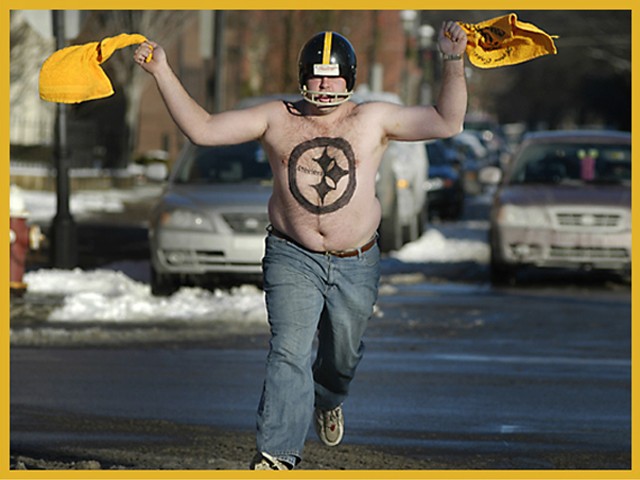
Fellow Duvalians – This is a problem far greater than Corrine Brown or drugs. It is the rising tide of Steelers fans in the South.
We must rise up and kill the Steelers fans. They are the worst people in Jacksonville. They are the ones that boss your dad around and flip their collars and act like they are working class fucks. They are responsible for the show The Office and Jersey Shore.
They outnumber Jag fans. The only thing they have ever shit out worth a damn is the Alibi and that’s only because they have the Crash Test Dummies in their jukebox.
One River’s E-Fucking-Nuff
The most obnoxious people from arguably the shittiest state in the union are from Pittsburgh. I had the misfortune of going to a Super bowl party one year when those cocksuckers went to the Superbowl. They are the alphamales. They voted for Bush both times, then bought the Sarah Palin book. They have brunch and healthy relationships with women far too interesting and pretty for their empty minds and the worst part is: They will be happy no matter how much you hate them the godless universe constantly lets them thrive like maggots on dead flesh.
Drive them back to that rust fuck city. Also, if anyone saw the last lecture series of the professor who in fact died from Carnegie Mellon University, I found him arrogant. He seemed like you would get stuck talking to him at a party and he would talk about the Mets or the EU.
Checker Diplomacy
Things are looking rough all over the US. We are in complete denial if we don’t think that China is the new Russia for the US.
Actually, they are far more powerful. They trade with the US and we owe them billions. They are far more educated and, like sharks, have no natural predators.
So last week I played checkers with a doctoral professor from China and it was clear that it was more than just a game. This game was purchased at Cracker Barrell- it was the carpet type. Not since the ping pong diplomacy and the 1980 US Hockey Team against the Russians has one game meant so much. Friends, I did not disappoint. While I did not beat him by taking all of his checkers, he admitted defeat after I trapped him.
It doesn’t change much. We are still fastly losing status as a uperpower and our dollar is incredibly weak. But it does show we can still dominate the world and oppress countries that have diamonds.
I propose our schools teach Chinese, ditch Spanish and Italian, allow corporal punishment, and also teach checkers. Our country must do like Dominos reinvent itself or parish.

 Facebook
 Twitter
 WordPress
— @ WiseStamp Signature. Get it now
WordPress
— @ WiseStamp Signature. Get it now
 Stanley McChrystal, the senior US general in Afghanistan, has told the Financial Times he believes a negotiated settlement would be the right way to end the Afghan conflict. His comments have fuelled a debate on the merits of talking to the Taliban.


 Christmas decorations outside Deji Plaza in Nanjing.

 Checker Diplomacy